<< Go Back up to Region ‘New York City’
| Follow Mike Hume’s Historic Theatre Photography: | |
|
Architects: McKim, Mead & White
First Opened: 12th January 1921 (105 years ago)
Website: thetownhall.org 
Telephone: (212) 997-6661
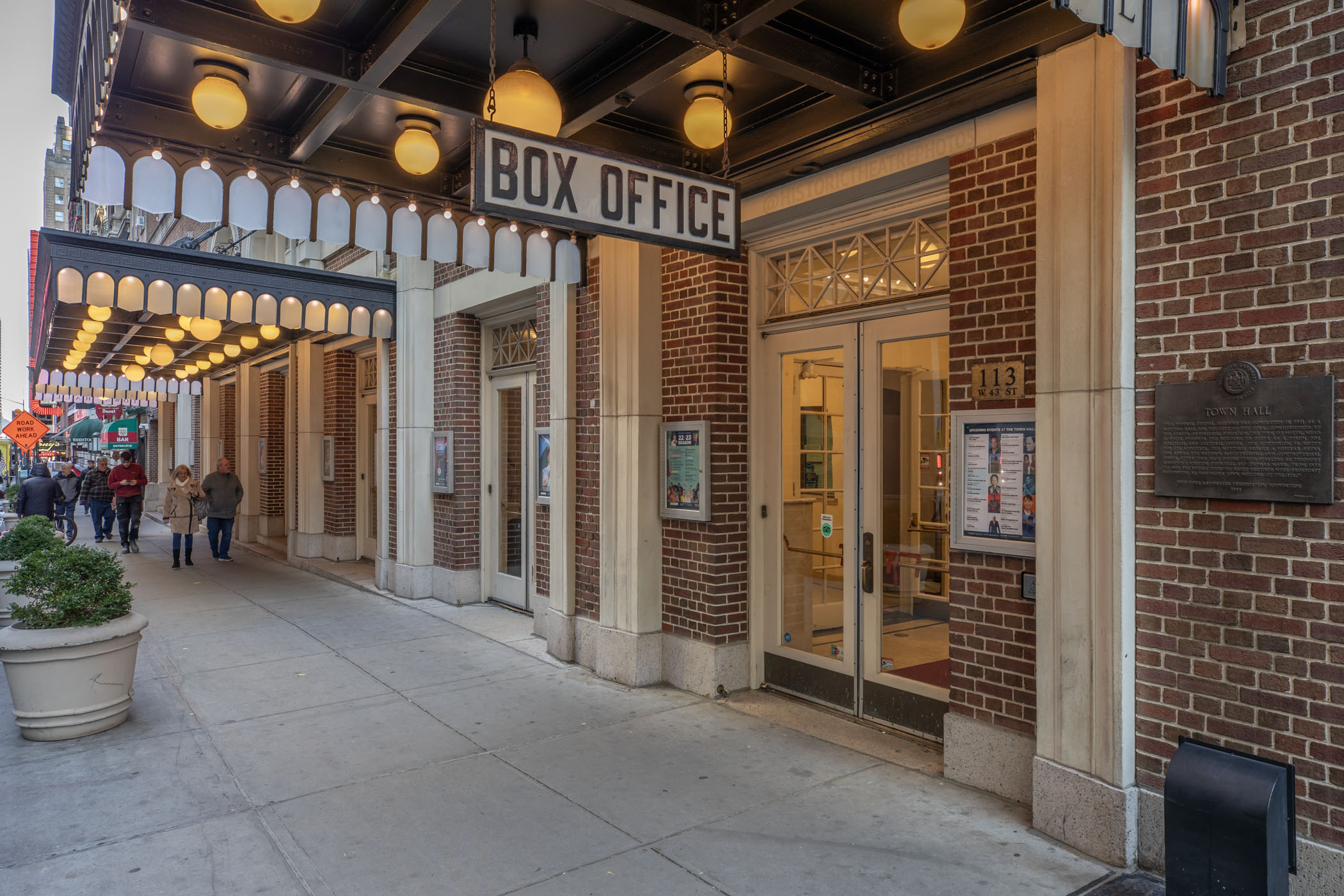
Address: 123 West 43rd Street, New York, NY 10036
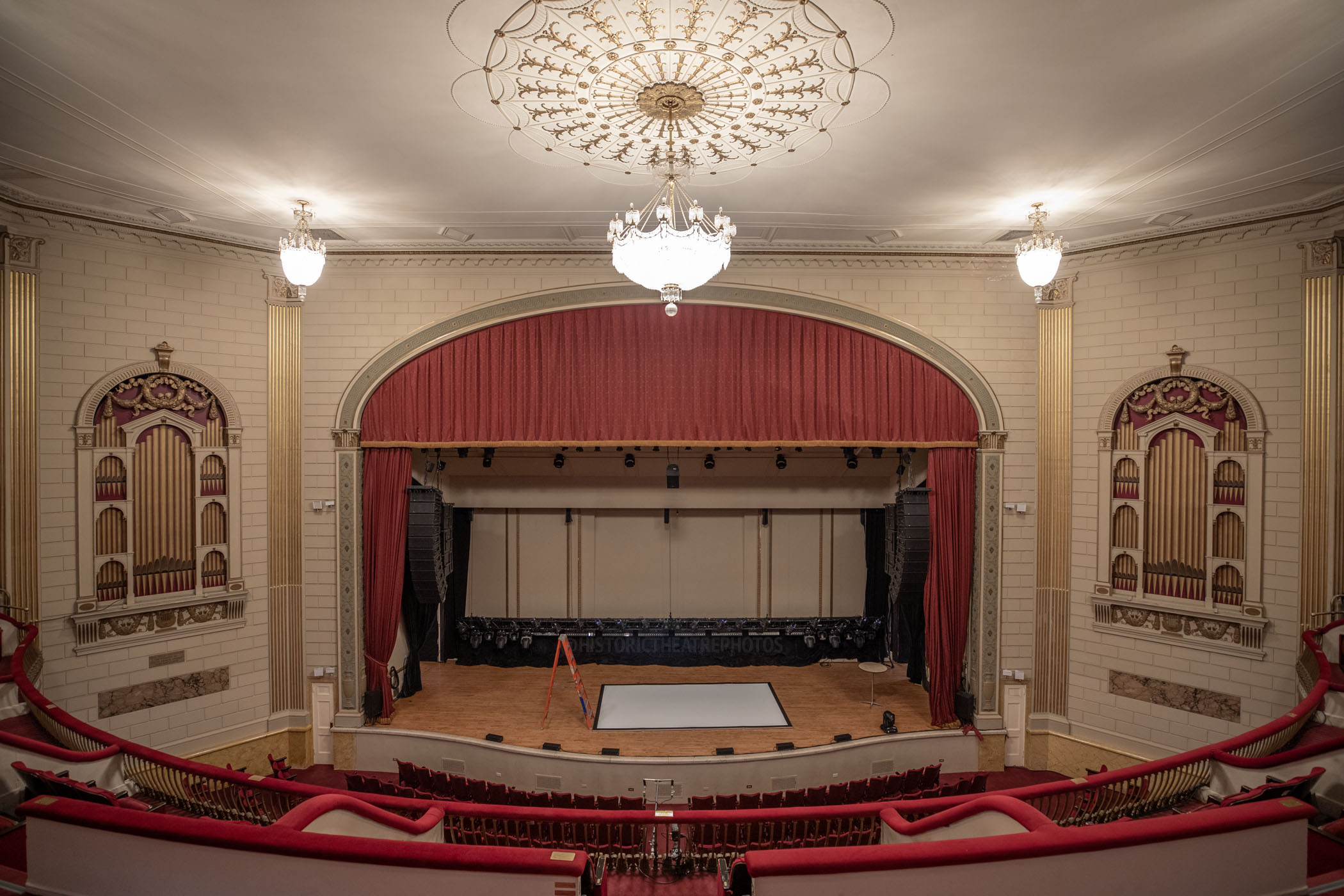
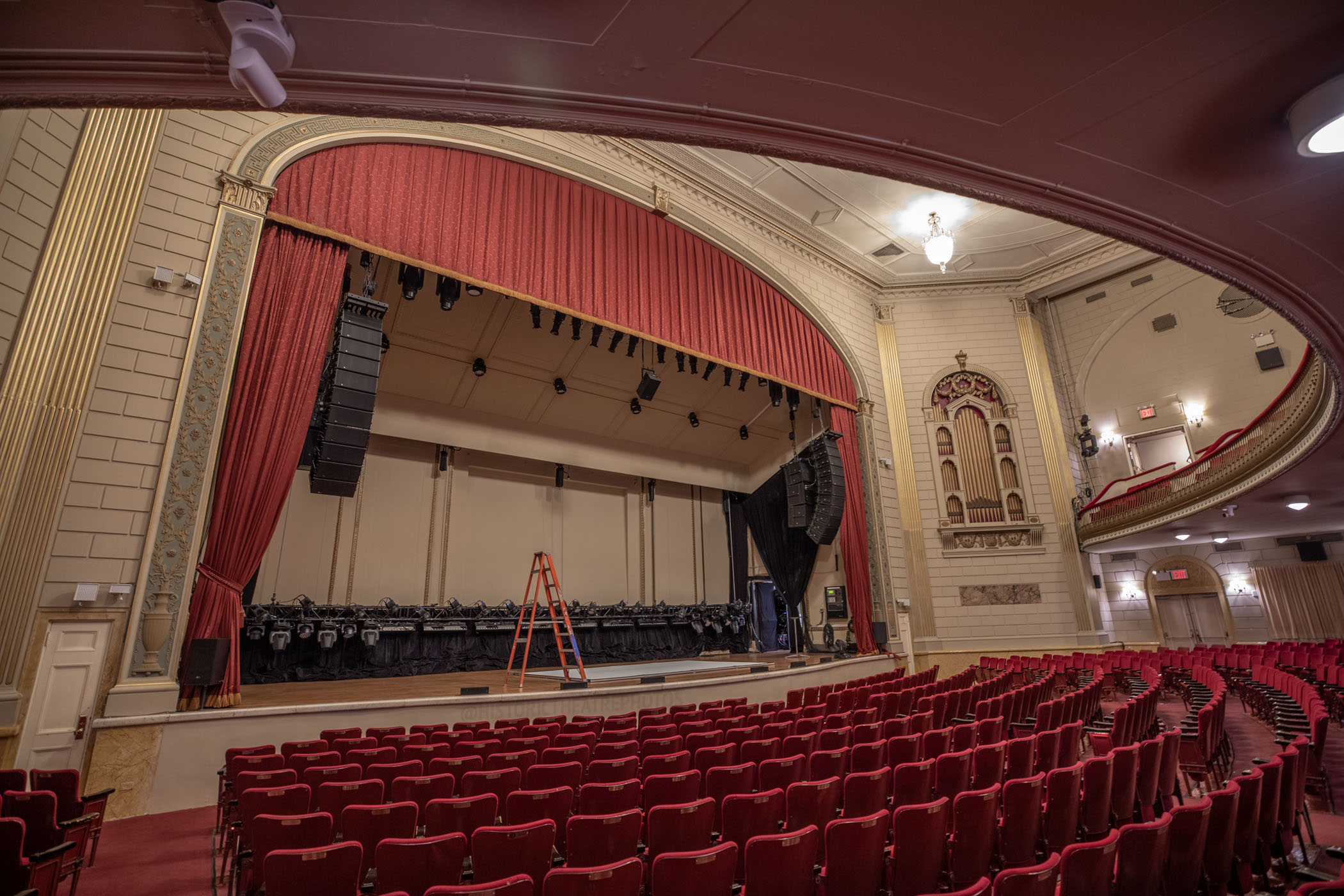
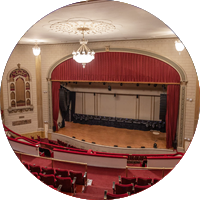
The 1,495-seat Town Hall on 43rd Street in New York City opened in January 1921, designed by architect firm McKim, Mead & White for the League for Political Education , which had been established in 1894 to advocate for women’s suffrage. The Town Hall is now a popular concert and events venue.

 Detailed Information
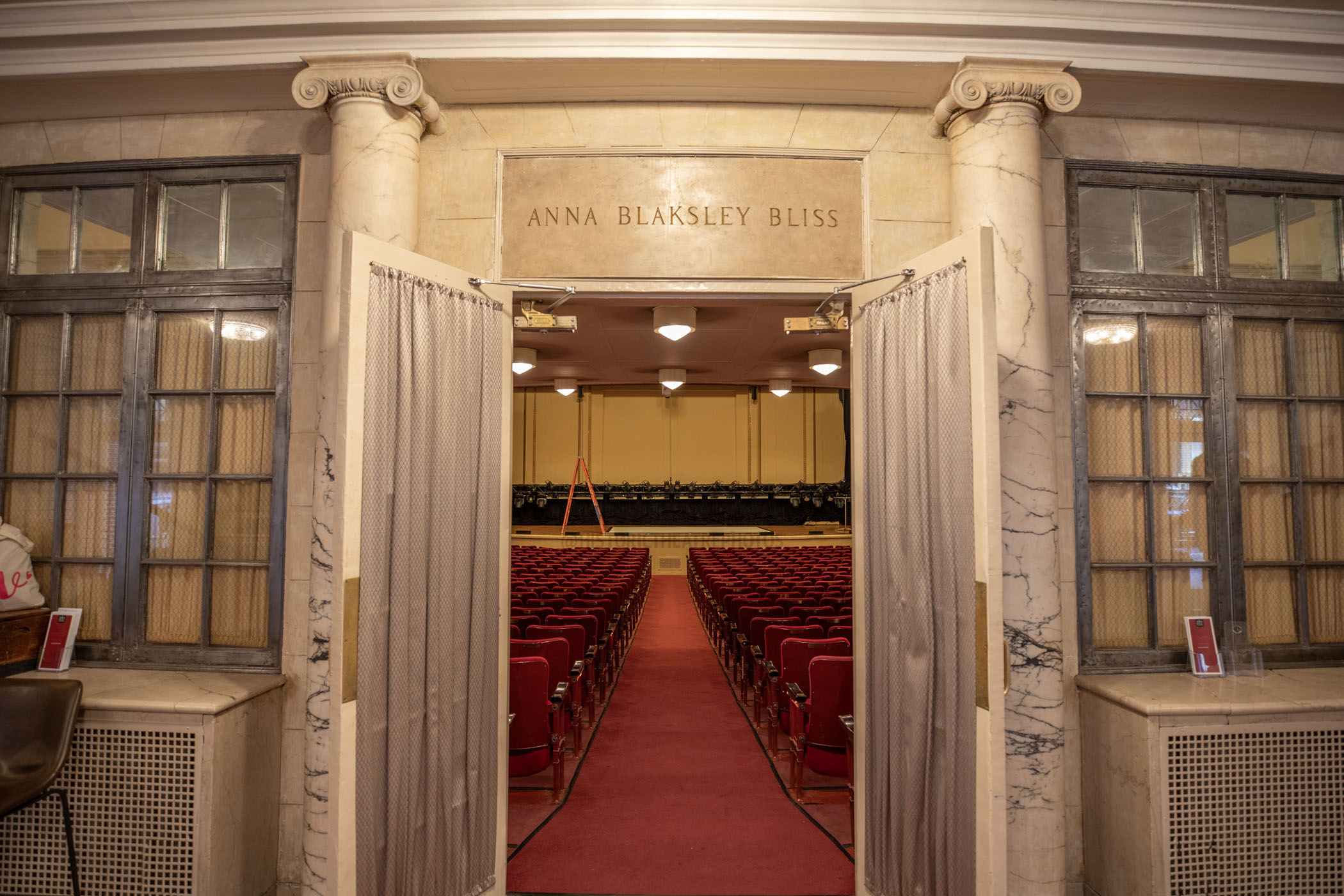
The Town Hall was built between 1919 and 1921, to a Georgian Revival design by architect firm McKim, Mead & White. The 1,500 seat auditorium is split between two levels. The stage was designed for concerts and recitals and so does not have a traditional stagehouse to allow for the flying of scenery.
In 1923 the theatre was equipped with a 4-manual, 46-rank organ manufactured by the Skinner Organ Company (opus 434). The $35,000 instrument was donated by Mr James Speyer as a memorial to his wife Mrs Ellin Speyer, on account of her “keen fondness for music”. When announced in late December 1922 it was reported by The New York Times that the organ would contain 2,913 pipes. It was also reported that “In addition to the traditional organ tone, Mr. Speyer’s gift will have many of the voices of an orchestra, such as the bassoon, oboe, tuba, harp, flute and French horn”. In 1935 the organ was completely overhauled by the Aeolian-Skinner Organ Company.
In 1935, Ernest Skinner’s organ in Town Hall was completely overhauled by the Aeolian-Skinner Organ Company (Op. J-5364), under the direction of G. Donald Harrison. By the late 1950s the organ was rarely used; in 1960 it was acquired by the Takoma Park Seventh-day Adventist Church, Takoma Park, Md., where it was moved and installed by Lewis & Hitchcock, Inc., of Washington, D.C.
According to Wikipedia , the first public-affairs media programming, the America’s Town Meeting of the Air radio program, broadcast from Town Hall between 1935 and 1956.
New York University (NYU) leased Town Hall in 1955. Within a few months, The New York Times wrote that “Town Hall was much emptier than usual by too high a rent scale.“ This was worsened by the opening of Lincoln Center in 1962 which drew events away from the Town Hall. The theatre’s organ was removed in 1960 and sold to raise money. It was acquired by the Takoma Park Seventh-day Adventist (SDA) Church in Takoma Park, Maryland.
The venue declined in popularity and in 1978 NYU closed the auditorium due to financial shortfalls. After Town Hall’s closure was announced, the Committee to Save Town Hall organized a campaign to preserve the venue. The city’s Landmarks Preservation Commission designated the façade and auditorium as city landmarks in late 1978.
At the end of the 1970s, the Town Hall Foundation took over ownership of the venue and rented it out regularly for events. The financial income allowed for renovations to take place in stages, culminating in a successful application for listing on the National Register of Historic Places in 1980.
The Town Hall became profitable by the late 1990s and has continued since then to present diverse and engaging entertainment within the century-old auditorium.
 Listed/Landmark Building Status (23rd April 1980) (28th November 1978)
 How do I visit The Town Hall?
Tours are typically given on Friday mornings at 10:30am and last about 1 hour. Specific dates offered vary by show schedule and staff availability and are subject to change. For the most up-to-date information check the “Tours” link on the theatre’s website .
 Further Reading on Wikipedia. courtesy of the New York City Chapter of the American Guild of Organists .Photos of The Town Hall
Photographs copyright © 2002-2026 Mike Hume / Historic Theatre Photos unless otherwise noted.
Text copyright © 2017-2026 Mike Hume / Historic Theatre Photos.
For photograph licensing and/or re-use contact us here . See our Sharing Guidelines here .
| Follow Mike Hume’s Historic Theatre Photography: | |
|