

<< Go Back up to Region ‘Sweden’
| Follow Mike Hume’s Historic Theatre Photography: | |
|
Architect: Carl Fredrik Adelcrantz
First Opened: 1753 (273 years ago)
Former Names: Ulriksdal Palace Theatre
Website: confidencen.se 
Telephone: 08-85 60 10
Address: Slottsallén 3, SE-170 79 Solna, Sweden
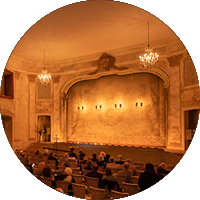
Confidencen, also known as the Ulriksdal Palace Theatre, is Sweden’s oldest surviving theatre and is located within the grounds of Ulriksdal Palace. Its name derives from the unique “table à confidence”, a dining table that can be raised from below. Brought back to working condition in the early 1980s, the theatre now hosts concerts, opera, and period performances.

 Detailed Information
Ulriksdal Palace is located in Solna, just north of Sweden’s capital city Stockholm. The palace theatre was constructed and opened in 1753 during the reign of Queen Lovisa Ulrika.
Designed by royal architect Carl Fredrik Adelcrantz, the theatre was created by converting an existing seventeenth century riding hall into an intimate theatre for the Swedish royal court.
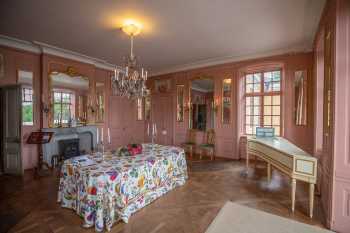
The theatre’s unusual name derives from the “table à confidence”, an ingenious mechanical dining table installed for the royal family in a dining room adjacent to the theatre. The table could be lowered through the floor to servants below, set with food and tableware out of sight, and then raised back into the dining room, allowing members of the court to dine privately – en confidence – without attendants present. The concept of privacy and exclusivity associated with this arrangement eventually gave rise to the theatre’s name, Confidencen.
Queen Lovisa Ulrika was an enthusiastic patron of the arts and sought to establish a sophisticated cultural environment at Ulriksdal comparable to those found at the royal courts of France and Germany. The theatre became an important venue for court entertainments, hosting operas, plays, ballets, concerts, masquerades, and other festivities.
Productions were often staged by members of the royal household and invited performers, reflecting the European traditions that strongly influenced Swedish court culture during the eighteenth century. The future King Gustav III, later renowned for his patronage of theatre and opera, spent part of his youth at Ulriksdal and developed many of the artistic interests that would shape Swedish theatrical life in the decades to come.
Architecturally, the theatre is an excellent example of Rococo design. The auditorium retains much of its original eighteenth century character, including decorative wall treatments, painted ornamentation, and elegant royal boxes. Unlike many historic theatres that were substantially rebuilt or modernized during the nineteenth century, Confidencen survived with a remarkable degree of authenticity. The intimate scale of the auditorium allows visitors to experience performances much as audiences would have during the theatre’s earliest years.
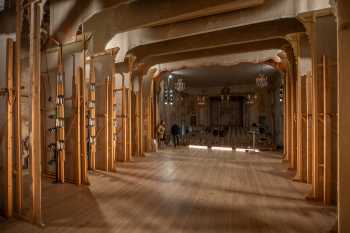
Equally significant is the preservation of the theatre’s original stage machinery. The manually operated system includes grooves, shutters, wing-and-border scenery arrangements, and machinery capable of producing rapid scene changes and special effects typical of eighteenth-century theatrical productions. Such systems were once common throughout Europe but have survived intact in only a handful of historic theatres.
By the late eighteenth century the theatre’s importance began to decline as royal attention shifted elsewhere. Following the death of Gustav III and changing tastes within the Swedish court, performances became less frequent. During the nineteenth century the building saw only occasional use and gradually fell into disrepair.
For many decades the theatre remained largely forgotten, serving various secondary purposes and escaping the extensive renovations that altered many historic performance spaces. While neglect threatened the building’s future, it also contributed to the survival of many original architectural and technical features that might otherwise have been lost.
In the 1920s, in connection with the rediscovery of the Drottningholm Palace Theatre, Confidencen was also investigated and found to be in much worse condition.
In 1935 Confidencen was declared a listed building. In 1965 the Ulriksdal Palace Theatre Foundation was formed with the intent of saving the theatre.
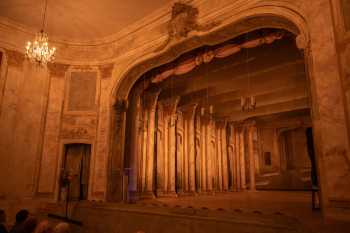
In the autumn of 1976, opera singer and cultural advocate Kjerstin Dellert visited Confidencen, recognizing the historical significance of the neglected building and thereafter leading efforts to restore and reactivate the theatre. Extensive conservation work was undertaken to preserve the original interiors, stage machinery, decorative elements, and historic character of the structure. Following restoration, the theatre reopened in 1981 and once again became an active cultural venue.
Today, Confidencen presents a program of opera, chamber music, theatre, and other performances, many of which emphasize historically informed staging practices that take advantage of the theatre’s original eighteenth-century equipment.
Confidencen remains one of Sweden’s most important theatrical landmarks. Its combination of authentic Rococo architecture, preserved stage technology, royal associations, and continuing use as a performance venue makes it unique among historic theatres. Visitors can experience a working eighteenth century theatre much as audiences would have more than 250 years ago, while modern productions continue to demonstrate the remarkable capabilities of one of Europe’s best-preserved court theatres.
 How do I visit Confidencen?
Confidencen offers several types of tours: a 40-minute discovery tour; a 40-minute children’s tour; and an extended format theatre enthusiast’s tour. All tours are available in Swedish and English. For full details of tours, schedules, and online booking go to Confidencen’s theatre tours page . Group tours are also available for up to 25 people, by arrangement with [email protected] .
Photos of ConfidencenPhotographs copyright © 2002-2026 Mike Hume / Historic Theatre Photos unless otherwise noted.
Text copyright © 2017-2026 Mike Hume / Historic Theatre Photos.
For photograph licensing and/or re-use contact us here . See our Sharing Guidelines here .
| Follow Mike Hume’s Historic Theatre Photography: | |
|


